

By Tushar Hazra, Ph.D.
Introduction: AI Forces a Structural Re-think of EA
Artificial Intelligence (AI) has often been described as a disruptive technology in industry today. For Enterprise Architecture (EA), this characterization is misleadingly mild. AI is not merely disruptive—it is structurally transformative. It alters the nature of systems, the mechanics of decision-making, and the distribution of risk and accountability across the entire enterprise.
For decades, EA has focused on optimizing stability, integration, reuse, and efficiency. These concerns remain relevant, but they are no longer dominant. AI introduces probabilistic behavior, continuous learning, opaque reasoning, and non-linear scaling of both value and failure. Many of the assumptions that underpin traditional architectural practice—determinism, predictability, and static design-time control—no longer hold. A shift in mindset to embrace and foster emerging trends, such as AI, is evident across all businesses and enterprises.
In this digital age of AI and innovation, EA must evolve from governing systems to architecting enterprise intelligence. This article examines what that evolution entails in practice and how experienced architects can adapt their methods, models, and leadership posture to remain relevant and effective. While there is no ‘one-size fits all’ approach, the industry is primarily encountering and adapting to the following mindset shifts:
- AI as a First-Class Architectural Concern
Many organizations are treating or considering AI as an incremental capability—introduced through pilots, innovation labs, or isolated tools. This approach fails at scale and amplifies risk.
AI must be treated as a first-class architectural element alongside applications, data, and infrastructure. This requires deliberate architectural decisions about:
- Where AI capabilities are hosted (central platforms vs federated teams)
- How models are trained, deployed, monitored, retrained, and retired
- How AI services are exposed, composed, and governed across domains
- How accountability for AI outcomes is assigned and enforced
Unlike traditional applications, AI systems have dynamic lifecycles: models decay and data drift. Today business context changes rapidly. Hence, architectural roadmaps must explicitly address these dynamics rather than assuming operational stability.
For executive architects, the core shift is this: AI is not a feature to be implemented—it is a capability to be architected. Financial institutions such as JPMorgan Chase have moved beyond isolated AI pilots by operationalizing AI as an enterprise capability (for example, scaling contract intelligence and similar use cases with clear lifecycle ownership, monitoring, and governance). The lesson is that AI does not scale as a feature—it scales as an architected capability.
- Data Architecture is transcending as the Center of Gravity
In many AI-enabled enterprises, data architecture effectively becomes enterprise architecture.
AI systems derive their behavior from data—its quality, completeness, semantics, and timeliness. As a result, long-standing data issues become immediate operational, ethical, and reputational risks.
Key architectural shifts often include:
- Moving from data pipelines to data products with explicit ownership and quality guarantees
- Treating semantic models, taxonomies, and ontologies as enterprise-level assets
- Designing distinct but connected architectures for:
- Training data
- Inference data, and
- Feedback and learning loops
- Supporting real-time and near-real-time data flows for decision-critical use cases
For seasoned architects in the industry, this is a difficult truth: weak data architecture no longer just slows the maturity of analytics—it actively degrades the quality of enterprise decisions. Digital-native organizations such as Amazon and Netflix treat high-quality, well-owned data as a product because their personalization and optimization engines depend on trusted semantics and timely feedback. The lesson is that weak data foundations do not just slow AI—they distort decisions.
- From Process-Centric to Decision-Centric Architecture
Traditional EA has been deeply process-oriented. AI shifts where value is created. Today, AI delivers business value primarily by augmenting, accelerating, or automating decisions, not by simply executing predefined processes more efficiently. As a result, decisions become the primary architectural unit of concern.
This shift has several implications, and perhaps associated consequences:
- Decision models must become explicit architectural artifacts
- Decision placement (human, AI-assisted, or fully automated) must be intentional
- Human-in-the-loop and human-on-the-loop patterns must be architected, not improvised
- Explainability and auditability must be designed for material decisions
For architects accustomed to BPMN and service decomposition, this requires expanding architectural thinking to include decision flows, confidence thresholds, and escalation paths.
Most industry executives care about decisions because that is where accountability, risk, and value converge. EA must now make decisions visible, governable, and adaptable. In the credit, fraud, and claims domains, organizations such as Capital One and leading insurers increasingly design around decision engines (human, AI-assisted, and automated) rather than solely around workflow automation. The lesson is that decision rights, thresholds, and escalation paths must be architected explicitly.
- Governance in the Age of AI: Designing Responsibility
AI governance is often framed in terms of compliance or ethics. This framing is insufficient. From an architectural perspective, governance must be structural and embedded, not procedural and retrospective. Policies alone cannot govern systems that learn and adapt.
Key architectural governance concerns include:
- End-to-end traceability from data to model to decision
- Clear separation of duties across training, deployment, and usage
- Explicit control points for human oversight
- Defined ownership for AI-driven outcomes—not just AI assets
Regulators and boards increasingly ask how decisions are made, not merely what systems exist. Architecture is the only discipline capable of answering that question coherently and defensibly.
In the current AI era, EA governance shifts from enforcing standards to designing responsibility into the enterprise fabric. Large technology providers such as Microsoft have formalized Responsible AI practices that embed documentation, review checkpoints, and accountability into delivery lifecycles. The lesson is that governance must be designed into architecture, not retrofitted through policy alone.
- Security, Trust, and Risk in AI-Driven Architectures
AI introduces new and unfamiliar risk vectors that traditional security architectures were not designed to handle. These include:
- Potential model theft, misuse, and inversion
- Data corruption and training contamination
- Prompt injection and indirect manipulation
- Vulnerabilities in the AI supply chain
- Undetected behavioral drift
These risks cannot be mitigated solely by a set of controls. They require architectural separation, isolation, and monitoring by design.
Key architectural responses include:
- Isolating training environments from operational systems
- Applying Zero Trust principles to data, models, and inference services
- Classifying AI systems by business criticality and impact
- Designing graceful degradation and fallback mechanisms when AI fails
For boards and executives, AI failures are not merely outages; they can permanently erode trust. Architecture must therefore emphasize containment and resilience as much as innovation. In healthcare and life sciences, clinical decision-support solutions commonly require validation environments, explainability, and clear human override to protect safety and trust. The lesson is that high-impact AI demands containment, monitoring, and graceful fallback by design.
- Platform Strategy Over Point Solutions
AI economics strongly favor platforms. Enterprises that accumulate isolated AI tools and vendor-specific solutions quickly encounter duplicate models, inconsistent governance, escalating costs, and fragile integrations.
EA plays a critical role in shaping an enterprise AI platform strategy, including decisions about:
- Foundation models versus domain-specific models
- Centralized enablement platforms versus embedded team capabilities
- Build, buy, or partner trade-offs
- Cloud, hybrid, and edge deployment patterns
The strategic question executives increasingly face is not “Which AI tools should we adopt?” but “Are we building enterprise AI capability—or merely consuming features?”
Architecture provides the structure needed to answer that question deliberately. Many enterprises are consolidating AI delivery into shared platforms (e.g., standardized model deployment, monitoring, and data access) to avoid duplicated models, inconsistent controls, and escalating integration costs. The lesson is that platforms create reusable capability; point tools create fragmentation.
- Organizational and Operating Model Implications
AI-driven architectures require corresponding changes in operating models.
Common shifts include:
- Moving from project-centric to product- and platform-centric funding
- Tighter collaboration between EA, Data, Risk, Legal, and Business leaders
- New roles focused on AI enablement, assurance, and lifecycle management
- Repositioning EA from standards authority to strategic integrator
Architecture increasingly shapes organizational behavior by determining who owns decisions, who is accountable for outcomes, and how risk is managed.
Senior architects must therefore design not only systems, but structures of accountability. Platform operating models used by organizations such as Netflix and major cloud adopters align teams around products and shared enablement platforms, with clear guardrails and accountability. The lesson is that architecture and org design co-evolve in the AI era.
- Measuring Architectural Success in the AI Era
Traditional EA metrics—standards compliance, application rationalization, cost efficiency—are insufficient. More meaningful measures include:
- Reduction in time-to-decision
- Reuse and composability of models and data products
- Latency from data availability to deployed intelligence
- Risk reduction through explainability and control
- Demonstrable business outcomes enabled by AI-driven decisions
EA success must be measured by intelligence outcomes, not architectural purity. AI-forward organizations increasingly measure outcomes such as reduced time-to-decision, improved decision quality, and safer automation—rather than relying solely on compliance metrics. The lesson is to treat intelligence outcomes as the architectural scorecard.
- The Evolving Role of the Enterprise Architect
Enterprise architects now serve as stewards of intelligence in the AI era. They operate at the intersection of strategy and execution, automation and accountability, innovation and risk. This positions EA as a trusted advisor not only to the CIO, but increasingly to the CDO, CTO, CRO, Chief Innovation Officer, General Counsel, and Board.
Architecture is no longer about managing complexity alone—it is about enabling responsible intelligence on a scale.
Current Observations: Recognizing the Obvious
Over the past ten-plus (10+) years, I have worked with many executives in the C-suite and executive architects to observe the above-mentioned shifts. According to the major research analyst groups, AI adoption has reached over eighty percent (80%) level in 2026, and the rate is still growing. However, there is a ramp ahead for the enterprise architects to scale AI in business decision-making today. According to Deloitte, AI adoption and utilization success hinges on the ability to move boldly from ambition to activation. While fostering AI fluency is inevitable, the adoption and utilization of AI as a technology revolution is essential. It relies on the consistent use of enterprise architecture as a layered intelligence backbone and operating platform for the technology stack.
Figure 1 (please see below) presents Enterprise Architecture as a layered intelligence backbone rather than a linear technology stack. It highlights how business outcomes are achieved through governed decisions, enabled by data, AI services, and resilient platforms.
At the top, the Business & Mission Outcomes layer defines strategic intent and performance objectives. The Decision & Governance layer makes explicit where decisions are human-driven, AI-assisted, or automated—and where oversight, ethics, and compliance are enforced. The AI & Analytics layer operationalizes models and inference services with monitoring and explainability. The Data & Knowledge layer provides trusted data products, semantics, lineage, and feedback loops. The Digital & Technology Platform layer provides the foundation for applications, integration, and infrastructure.
Security, Risk & Trust are cross-cutting across all layers (e.g., Zero Trust, auditability, resilience). The arrows represent continuous learning loops—outcomes inform decisions, decisions refine models, and models depend on evolving data—rather than a one-way flow.
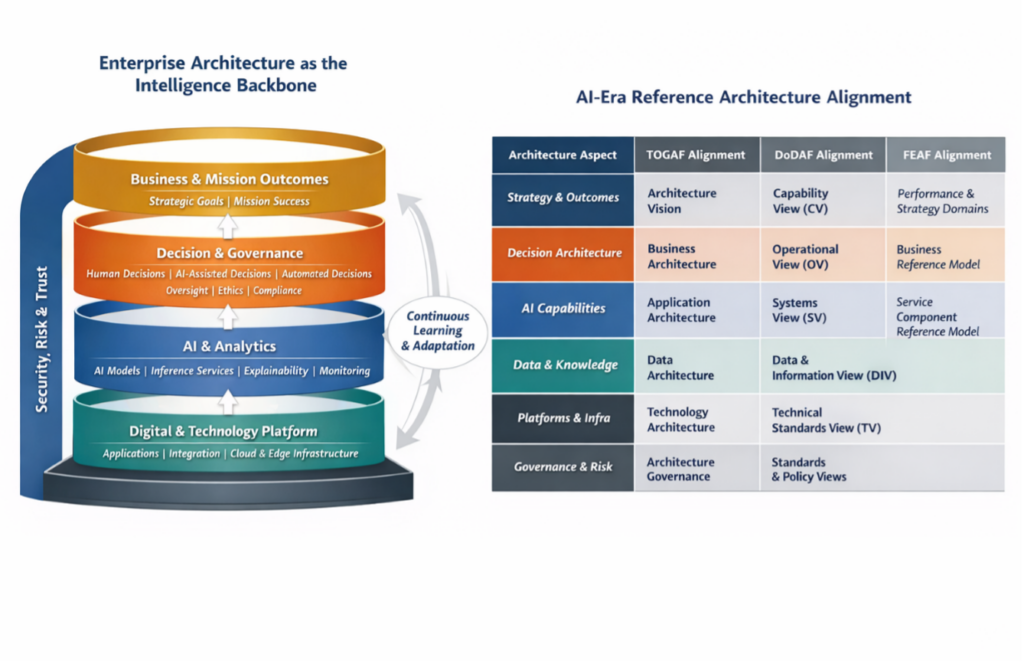 Figure 1: Enterprise Architecture as the Intelligence Backbone
This figure also provides an overview of the Reference Architecture Alignment mapped to the TOGAF, DoDAF, and FEAF architectural frameworks (Please see Table 1 below). The conceptual model does not replace established frameworks such as TOGAF, DoDAF, or FEAF. Instead, it shows how AI increases the need to integrate viewpoints coherently around decision intelligence.
AI makes decisions, and learning loops are the unifying thread: strategy drives decision intent; decisions determine where AI is applied; AI depends on trusted data and resilient platforms; and governance must trace outcomes back through models and data to accountable owners.
| Architecture Aspect | TOGAF Alignment | DoDAF Alignment | FEAF Alignment |
| Strategy & Outcomes | Architecture Vision | Capability View (CV) | Performance & Strategy Domains |
| Decision Architecture | Business Architecture | Operational View (OV) | Business Reference Model |
| AI Capabilities | Application Architecture | Systems View (SV) | Service Component Reference Model |
| Data & Semantics | Data Architecture | Data & Information View (DIV) | Data Reference Model |
| Platforms & Infrastructure | Technology Architecture | Technical Standards View (TV) | Technical Reference Model |
| Governance & Risk | Architecture Governance | Standards & Policy Views | Security & Privacy Profile |
Table 1: Reference Architecture Alignment Mapping
Conclusion: Architecture as the Operating System for Enterprise Intelligence
Artificial Intelligence does not reduce the need for EA—it makes it indispensable. As AI accelerates decision velocity, data complexity, and organizational interdependence, architecture becomes the stabilizing force that ensures coherence, trust, and strategic alignment. However, the EA as a discipline must evolve.
EA must shift from static blueprints to adaptive capability design—building systems that can learn, scale, and evolve safely. It must shift from a process-centric to a decision-centric lens, recognizing that AI fundamentally reshapes how decisions are made, augmented, and governed. And governance itself must transform from control-centric oversight to responsibility-by-design—embedding transparency, accountability, and ethical safeguards directly into intelligent systems.
Enterprises that succeed with AI will not simply be those with the most advanced models, but those with architectures that enable continuous learning, trust, and accountability on a scale.
In this new era, Enterprise Architecture becomes the operating system for enterprise intelligence—orchestrating data, platforms, decisions, and governance into a coherent, resilient, and responsible intelligent enterprise.
In my humble opinion, AI does not replace existing frameworks; it forces tighter integration across viewpoints, with decisions and intelligence as the unifying thread. In regulated industries, enterprise architects are increasingly pulled into AI risk councils and model governance forums to connect strategy, technology, data, and accountability. The lesson is that architects become stewards of enterprise intelligence—not just system integrators.