

(Editor’s Note: This article represents part six of an ongoing series. Part one, “The Unavoidable ‘SCREAM’: Why Enterprise Architecture Must Transform for the Organization of Tomorrow” introduced the conceptual overview. Part two, “The Anatomy of SCREAM: A Perfect Storm in EA Cupboard“ detailed the current state of chaotic SCREAM. Part three, “The Co-Architect EA: Enterprise AARAM Through AI” detailed the aspirational future state of blissful AARAM. Part four, “TRIAL: Charting the Path from SCREAM to AARAM” highlighted the three-pronged bridge to AARAM. Part five, “BITS & BYTES: The Foundational Lens for Enterprise Transformation“ established the atomic language for architectural domains. Part six, W.A.R & P.E.A.C.E: The Critical Battle for Organizational Harmony the second lens addressed the human and most important dimension of transformation, this installment , the third and last lens provides a potent methodology distinct from traditional integration patterns, designed to be the operational linchpin of this transformation.)
The hub-and-spoke model is one of the most successful ideas humanity ever borrowed from geography and logistics. Delta Air Lines popularised it in the 1950s to serve small cities efficiently. FedEx turned it into an overnight empire in the 1970s. Computer networks and middleware later adopted it as the “star topology” and a canonical enterprise integration pattern.
The reason is simple mathematics: to connect N destinations directly you need N(N−1)/2 routes. With one central hub you need only N. Maximum reach, minimum complexity.
In 2025 the same topology is ready for its most important job yet: keeping an entire enterprise architecture continuously synchronised and AI-enabled.
From People-Heavy to System-Enabled
Today most enterprises still run on heroics, emails, slide decks, and 200-person conference calls. Even when a good repository and healthy collaboration culture exist, nothing “sticks” without a mechanism that relentlessly harvests reality, unifies understanding, and broadcasts the right truth to the right person at the right moment.
That mechanism is a new application of hub-and-spoke – not just for data integration, but for architecture governance itself. We call it simply Hub & Spoke.
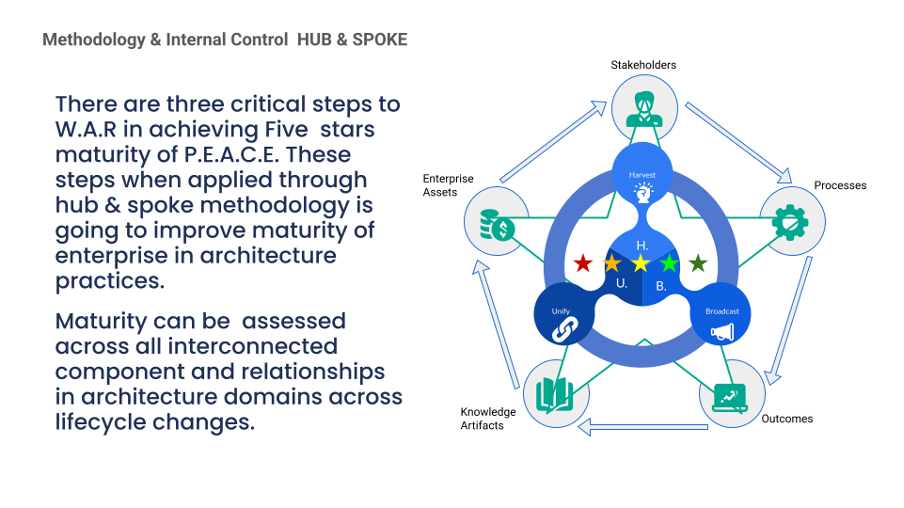
Figure 1: Overall construct for hub & spoke for enterprise architecture maturities
The Hub: Three Actions That Never Sleep (H.U.B.)
At the centre runs a continuous cycle of three actions:
- Harvest – Ingest everything that matters: scanner output, CI/CD metadata, application inventories, risk registers, process models, meeting outcomes, human feedback, and (increasingly) agentic AI crawls. Nothing is left to tribal knowledge.
- Unify – Connect the dots. Establish relationships, resolve duplicates, detect patterns and anti-patterns, and maintain one coherent model of the enterprise.
- Broadcast – Push the right view, in the right language, through the right channel, at the right time. A CIO sees strategic heatmaps; a developer receives contextual architecture guardrails inside the IDE; a regulator gets a compliance report on demand.
These three actions run 24×7 inside the repository (the “hard truth”) and inside collaborative environments (the “soft execution”). Modern agentic AI loops (observe–orient–decide–act) follow the exact same rhythm. The congruence is not accidental.

Figure 2: The H.U.B. Cycle in Motion shows these three actions running continuously, 24×7, feeding both the repository (W.A.R.) and collaborative execution (P.E.A.C.E.).
The Enterprise’s Capabilities: S.P.O.K.E. Defined

Figure 3: S.P.O.K.E. Visual shows Outcome in the center, the four other spokes radiating out, with H.U.B. actions wrapping the wheel like a tire that never stops turning.
To fully leverage the H.U.B. actions, we apply them to five fundamental capabilities that drive any organisation, encapsulated in S.P.O.K.E.:
- Stakeholders – who cares and who decides
- Processes – sequences that deliver value
- Outcome – the why (always placed in the centre of the model)
- Knowledge – codified artefacts (models, policies, decisions, blueprints)
- Enterprise Assets – systems, data, infrastructure, contracts
Outcome is the absolute central part of this methodology: we always start with Why are we doing this? For any desired business or architectural outcome—faster time-to-market, regulatory compliance, cost reduction, Speed 3 AI governance—ask: which S.P.O.K.E. elements must be harvested, unified, and broadcast? The answer immediately reveals gaps and priorities.
These capabilities aren’t new vocabulary for the sake of it. They’re inspired by decades of formalised frameworks—IBM Industry Models, BIAN service landscapes, TOGAF’s Enterprise Continuum, and classification theory elements that have shaped enterprise thinking since Zachman’s original framework. What Hub & Spoke does is operationalise them—make them measurable, actionable, and continuously synchronised. Hub & Spoke can be universally applied to any organisational work—information management, procurement, system integration, capability-based planning.
From Subjective Maturity to Measurable Heatmaps
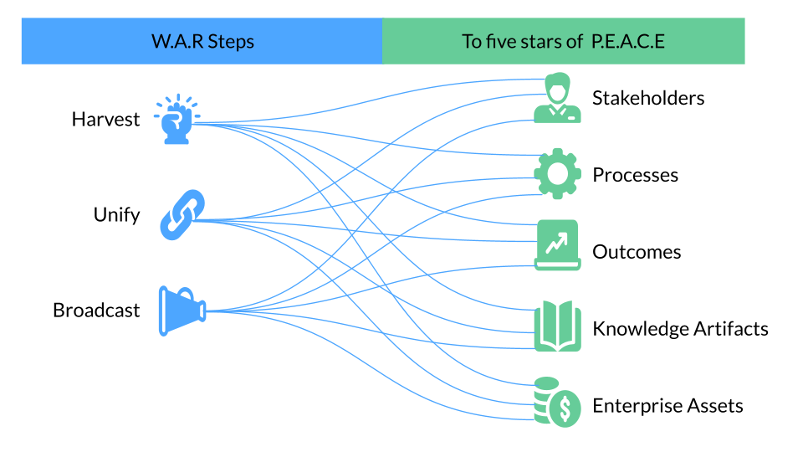
Figure 4: This correlated capture of information provides the five star maturities
When Harvest–Unify–Broadcast is applied systematically across S.P.O.K.E. for a given capability and lifecycle phase (plan, design, build, run), maturity ceases to be an opinion. It becomes a calculated score grounded in observable signals.

Figure 5: Applying the same for Enterprise Architecture Maturity
| Rating | Description |
| ★★★★★ | Fully system-enabled, AI-augmented, self-optimising, real-time |
| ★★★★☆ | Highly automated repository, proactive broadcast |
| ★★★☆☆ | Defined processes, some automation, tracked artefacts |
| ★★☆☆☆ | Documentation exists but disconnected and stale |
| ★☆☆☆☆ | People-dependent chaos, hero architects, tribal knowledge |
Because the underlying data is correlated, the model produces objective heatmaps and precise roadmaps. A capability rated 1.7 tells you exactly which harvesting gaps, unification rules, or broadcast channels to fix to reach 2.0, then 3.0.
Do we have the right stakeholders fully engaged? Are our processes mature, moving from manual to automated? Is the knowledge readily available and accurate? You can rate everything through this lens: the maturity of your BITS & BYTES (technical foundations), the organisational harmony (War & Peace), or any business capability you care about.
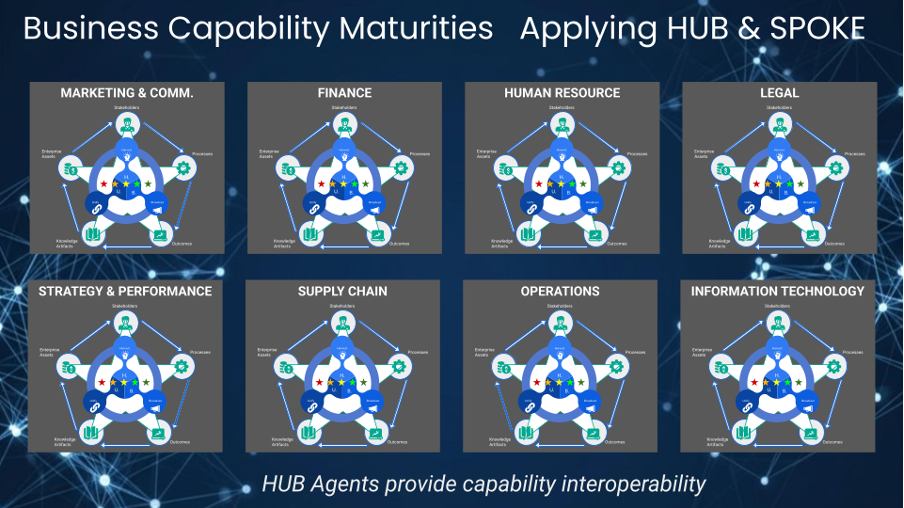
Figure 6: Five-Star Maturity Ratings shows example high level capabilities for any given organization.

Figure 7: Dotting the I and Crossing the T through interdependence of capabilities.
This systematic approach reveals your enterprise architecture’s true maturity level beyond anecdotal evidence, providing a data-driven view. Once you understand your current maturity (e.g., 1.3), it precisely dictates the steps needed to reach the next level (e.g., 2.0)—defining the processes, changes, and investments. It becomes the guiding force for well-defined, actionable improvements.
Application of Hub & Spoke across capabilities with mathematical computation provides the transparency across entire enterprise architecture that leaders have been demanding for years.
The Complete Operating Model : Hub & Spoke Completes TRIAL
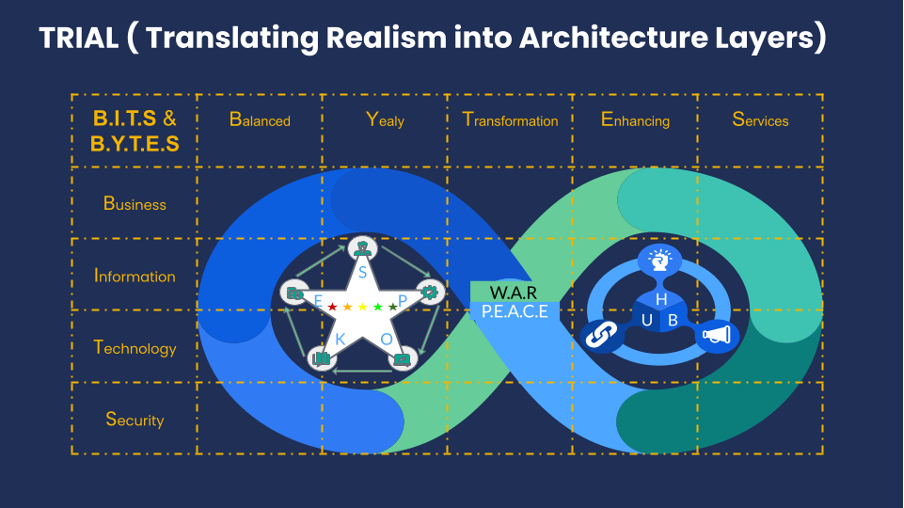
Figure 8: The Complete Operating Model shows W.A.R. repository at the center (the hub), BITS domains and lifecycle stages as spokes, with Hub & Spoke actions (H.U.B.) running continuously in both repository management and collaborative execution modes.
The repository and collaboration spaces both sit on the same wheel, kept in sync by the same engine. This is where everything comes together. Within the broader TRIAL framework, Hub & Spoke is the operational mechanism that makes both W.A.R. (the hard truth) and P.E.A.C.E. (the soft collaboration) actually work in practice—delivering the promised AARAM state: Agentic AI Reinforced Architecture Maturities.
Hub & Spoke completes TRIAL. BITS & BYTES provided the foundational language—the atomic view of domains and guardrails. W.A.R & P.E.A.C.E established the cultural shift—the repository and collaborative execution. But without Hub & Spoke, BITS & BYTES remains a static framework and War & Peace becomes episodic rather than continuous. Hub & Spoke is the engine that makes TRIAL run (plan, design, and build).
Why This Matters in the Age of Agentic AI
Large language models are impressive, but they hallucinate when the underlying architecture is fragmented. Feed and leverage an AI for continuously harvested, unified, and broadcast S.P.O.K.E. model and it becomes a credible Co-Architect—the COArCH we envisioned in Part 3: running impact simulations, proposing guardrails, scoring options, drafting decision logs—all in context.
If I were to design an AI system for enterprise architecture today, I would focus on these eight fundamental high-level constructs:
H.U.B. (3) + S.P.O.K.E. (5) = 8 Core Constructs
Nothing more is truly needed. An AI system, fed by this continuous flow of harvested, unified, and broadcast S.P.O.K.E. data, can handle all necessary analyses and guidance.
Each H.U.B. action and S.P.O.K.E. dimension becomes an explicit signal in the architecture graph that AI agents can query, update, and reason over. Enterprise architecture stops being a stack of documents and becomes a live control surface for agentic systems—turning maturity scoring into autonomous recommendations and simulations.
The 200-person “just-to-make-sure” calls disappear. Only the right stakeholders are pulled in, armed with the right artefacts, following the right process, for the right outcome. The enterprise finally flips from people-dependent systems to system-dependent people. No more hallucinating pyramids. No more bureaucratic theatre. Just precision, speed, and alignment.
From Board Operators to Strategic Advisors
I firmly believe that the days of “people-dependent systems” are numbered. Tomorrow will see “system-dependent people,” where generative AI and other autonomous technologies become the primary drivers. Just as a Tesla can often drive better than the average human without fatigue, or robots perform complex tasks with superhuman precision, we must empower intelligent systems to manage and evolve our architectures.
Enterprise architects stop chasing updates and start steering. Like a pilot monitoring autopilot or a Tesla owner trusting Full Self-Driving on a clear highway, the architect’s job becomes supervision of an intelligent system rather than manual operation of a chaotic one.
Our role as EA practitioners must shift from micromanaging every detail to becoming “board operators” for enterprise architecture management—strategic advisors who guide the organisation across its architectural maturities, leveraging the power of AI to synthesise vast knowledge bases and frameworks that have accumulated over decades.
Decisions that used to take months now take hours because everyone works from the same unified truth.
Call to Action: Run Your Own Pilot
We have heard about capability-based planning, but choose any lifecycle state architecture work regardless of industry. Pick any outcome you care about in your organisation:
- Speed-to-market for a new digital product
- Cloud cost governance
- GenAI risk framework
- Post-merger integration
- Speed 3 transformation with AI governance
Map the required S.P.O.K.E. elements, score current Harvest–Unify–Broadcast coverage, and calculate your gap to the next star. The exercise takes less than a day and invariably reveals leverage points no one saw before. Run it through the Hub & Spoke construct and let me know if that helps.
We are building the actual operating system for next-generation enterprises and want your real-world feedback. Try it, break it, improve it. Reach out on LinkedIn or via the magazine.
The information technology industry has always been the fastest-growing, and it will remain so for a long time. Our ability to strategically accelerate or decelerate its evolution, to steer its direction with Speed 3 transformation roaring around us, is now squarely in our hands.
The future is system-driven. Hub & Spoke is the engine that gets us there.
Next: Go forward : Collaborating as an architecture community .
References
[1] Previous installments in this series, Architecture & Governance Magazine
[2] O’Kelly, M. E. (1998). “A Geographer’s Analysis of Hub-and-Spoke Networks.” Journal of Transport Geography, 6(3), 171-186.
[3] Bryan, D. L., & O’Kelly, M. E. (1999). “Hub-and-Spoke Networks in Air Transportation: An Analytical Review.” Journal of Regional Science, 39(2), 275-295.
[4] Hohpe, G., & Woolf, B. (2003). Enterprise Integration Patterns: Designing, Building, and Deploying Messaging Solutions. Addison-Wesley Professional.
[5] Ross, J. W., Weill, P., & Robertson, D. C. (2006). Enterprise Architecture as Strategy: Creating a Foundation for Business Execution. Harvard Business Review Press.
[6] The Open Group. (2022). TOGAF® Standard, Version 10: Enterprise Architecture Framework. The Open Group.