

By Holt Hackney
Brice Ominski is an enterprise architect and executive advisor who helps organizations move from strategy to execution by designing change-ready enterprises that deliver measurable business value.
He is also an inaugural board member of the Chief Architect Forum (CAF), where he is recognized as a leader in business and integration architecture, with deep experience in modernization, cloud transformation, AI adoption, governance, and large-scale IT integration.
Throughout his corporate career, Ominski has served in senior executive roles, partnering closely with boards, C-suites, and technology leaders.
He also takes great pride in mentoring architects and is the author of the forthcoming book Digital Momentum: Building Real Change-Ready Enterprises.
To learn more about Ominski’s career and more specifically his work with CAF, we recently conducted the following interview, included below:
Question: Tell us about your experience in technology and architecture?
Answer: I’ve been involved in business technology for over 20 years. I completed my master’s degree in Machine Intelligence and joined the Price Waterhouse Emerging Technology Group, where I was exposed to applied innovation at a formative stage. That experience shaped both my technical foundation and my enduring interest in how technology translates into real organizational capability and business outcomes.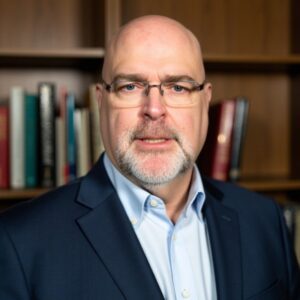
Throughout my career, I’ve led and supported digital transformation efforts across organizations of many sizes, often operating in CTO and Chief Architect roles. My work in business architecture and enterprise architecture has focused on helping mid-sized organizations turn strategy into clear operating models and executable roadmaps, while guiding large enterprises through complex, large-scale architecture and integration initiatives that improved coordination, reduced risk, and enabled sustained change. A constant theme has been a strong learning mindset, staying curious, exploring new ideas, and applying emerging technologies and business innovation in ways that support real decisions and measurable business outcomes, rather than isolated technical change.
Q: How did you get your start in technology?
A: My fascination with technology began early, particularly with science and engineering. In high school, personal computers were just becoming accessible, and the sense of possibility was undeniable. I chose engineering to pursue that curiosity, but I was always drawn to the practical application of technology.
Q: What do you like most about your current work?
A: What I enjoy most today is the ability to share insights and help others navigate complexity. I get tremendous satisfaction from mentoring and teaching, particularly in areas such as business architecture, integration architecture, and emerging technologies, including AI, quantum computing, massively parallel systems, and other forms of technological innovation.
I thrive on variety, moving between strategic conversations, architectural design, and hands-on exploration of new ideas. That ability to operate across levels keeps the work stimulating. I’m naturally curious and enjoy experimenting with new approaches, whether they involve business models, operating structures, or technology. It’s also deeply motivating to help organizations achieve successful outcomes. Too many initiatives struggle not because teams are incapable, but because the systems, incentives, and operating models within which they work are often misaligned.
Q: Why did you join the Chief Architect Forum (CAF)?
A: Initially, I joined CAF expecting strong presentations and thought leadership. What surprised me was how quickly the value shifted from content to people. Attending the first live meetup in Minneapolis was pivotal. Meeting peers face-to-face, chief architects dealing with the same organizational and strategic challenges created an immediate sense of trust and shared purpose.
It was also personally meaningful to reconnect with people I had worked with earlier in my career, including mentors and teachers, and to build new relationships with others whose perspectives continue to challenge and refine my thinking.
Q: What have been some unexpected benefits of belonging to CAF?
A: The most unexpected benefit has been the emotional and practical support. Architecture leadership can be isolating, and CAF provides a space where ideas can be explored openly, debated constructively, and stress-tested against real-world experience.
When I put forward my Digital Momentum book proposal, the encouragement and support from CAF members made a real difference from early validation through refinement. It was also affirming to realize that many ideas I initially thought were cutting-edge or even radical are shared challenges we all face. In an era of rapid change, learning alongside peers is invaluable.
Q: What’s one trend or challenge architects should pay more attention to right now?
A: Technology adoption itself. It’s risky to fixate on a single technology, AI included, without understanding the broader competitive landscape. I saw this firsthand while working on early AI initiatives at Price Waterhouse. Many ideas eventually became mainstream, but often through technologies different from those originally expected.
Architecture’s role is to manage plurality: multiple technologies, skills, and timelines. This also connects directly to technical debt, not just in systems, but in people and culture. Legacy platforms carry risks of institutional knowledge, while newer technologies reward curiosity, adaptability, and continuous learning. Architects must design for both in the service of their business stakeholders.
Q: What advice would you give to aspiring architects?
A: Cultivate curiosity and humility. Architecture isn’t about being right: it’s about serving the business. A learning mindset is essential: being open to new ideas, willing to test assumptions, and comfortable adjusting course as understanding deepens.
Aspiring architects should embrace learning, accept imperfect conditions, and recognize that growth comes from navigating constraints. I strongly encourage joining professional communities like IASA, seeking mentorship, and learning from those who’ve already navigated the path. Architecture is as much an emotional and leadership discipline as it is a technical one.