

(Editor’s note: Part 1 appeared yesterday, and is available here.)
Dr. Gopala Krishna Behara
Agentic AI Reference Architecture
Agentic AI systems follow Single-agent and multi agent architecture models. These systems leverage Machine Learning models and methods to enable intelligent decision making and automation.
Agentic AI architecture shall be robust, modular, and secure that supports autonomous reasoning, tool‑use, workflow orchestration, and multi‑agent collaboration. Agentic AI architecture integrates planning, memory, action execution, safety, and governance across the enterprise.
The following Figure shows logical architecture of Agentic AI with key components and layers.
The various layers of the Agentic AI architecture are classified as,
- Experience & Channels Layer
- Perception Layer
- Cognitive / Agent Orchestration Layer
- Action & Tools Layer
- Data & Knowledge Layer
- Integration Layer
- Operations & Observability Layer
- Governance, Security & Risk Layer
- Infrastructure & Platform Layer
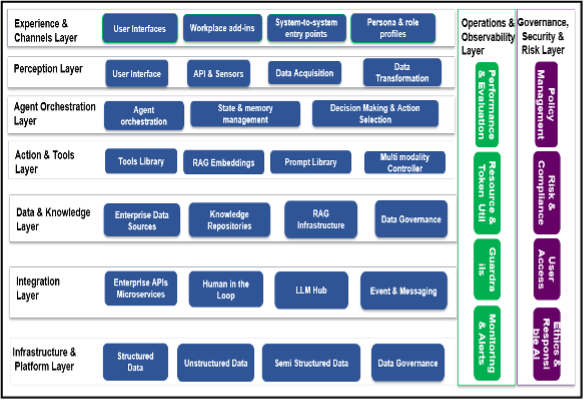
Figure 6: Agentic AI Logical Reference Architecture
Experience & Channels Layer: Various stakeholders like Employees, Customers and Partners and systems interact with the agents in an intuitive and secure way. The various components of this layer are,
- User Interfaces: Web apps, portals, mobile apps, chat widgets, voice interfaces, CLI
- Workplace add-ins: Teams/Slack plugins, Outlook add‑ins, intranet tiles, line‑of‑business UI embeds
- System‑to‑system entry points: Webhooks, event streams, scheduled jobs that trigger agents
- Persona & role profiles: Map enterprise roles to specific agents, tools, and permissions
Perception Layer: This is ingestion and normalization layer where agents perceive the world. Agentic AI gathers situation information from its surroundings and different sources like sensors, databases, and user/digital interfaces. This involves analyzing text, images, or other forms of data to understand the situation. It converts unstructured data into a structured format, allowing the cognitive layer to process information efficiently. Various components of this layer are,
- User interface input handlers: Text, voice, image, form data, file uploads
- APIs & sensors: Domain APIs, IoT feeds, logs, events, EHR/ERP/CRM data triggers
- Data acquisition systems: Batch ingestions, message buses (Kafka, Service Bus), streaming platforms
- Data transformation & normalization
- Parsing, validation, schema mapping
- PII redaction / de‑identification where needed
- Conversion into canonical “events” or “observations” for agents
Cognitive / Agent Orchestration Layer: This layer is the brain of the Agentic AI system. It manages the agent’s internal state, processes information from the perception layer, and determines the most appropriate actions based on its goals and current understanding. The main purpose of this layer is to Plan, reason, orchestrate tools, manage state, and coordinate multi‑agent workflows. Key capabilities are,
- Planning & task decomposition: Break high‑level goals into sub‑tasks, sequence them, and adapt plans as new information arrives
- Agent orchestration: Single agent flows (one agent managing a workflow), Multi‑agent collaboration
- State & memory management: Short term conversation state, Long term task memory, Episodic memory of past runs and outcomes
- Contextual reasoning: Using retrieved knowledge, tool outputs, and history to make decisions, handling ambiguity and asking clarifying questions when needed
- Continuous learning (behavioral): Incorporating feedback signals, success/failure, and human corrections into future decisions (via patterns, not direct self‑training in production models)
- Decision-making & action selection: Choosing which tool to call, when to involve humans, and how to proceed given constraints
Action & Tools Layer: This layer translates decisions from the orchestration layer into activity. It provides a structured, governed toolkit that agents responsible for validating actions, can safely invoke to read, write, and act across the enterprise and monitoring implementation. The various components of this layer are,
- Tools library / skills registry: CRUD operations on enterprise systems, Domain workflows, External services
- RAG & embeddings: Embedding models, Vector stores for documents, KBs, FAQs, policies, Retrieval pipelines and ranking logic
- Prompt / pattern library: Reusable prompt templates, Chain / graph definitions, Safety patterns and escalation prompts
- HITL controller & coordinator: Human-in-the-loop decision points, Approval workflows, Exception handling flows and routing
- Multimodality controller: Handling text, images, audio, structured data interchangeably, Routing to specialist models (vision, speech, code, etc.)
Data & Knowledge Layer: It provides governed, high‑quality, context‑rich knowledge and data that agents can reason over. The various Components of this layer,
- Enterprise data sources: Data warehouses, data lakes, operational DBs, Domain systems
- Knowledge repositories: Document stores, wikis, policy repositories, SOPs, Email archives, tickets, chat logs, call transcripts
- Semantic layer: Ontologies, taxonomies, business glossaries, Knowledge graphs linking entities and relationships
- RAG infrastructure: Vector stores for per‑domain corpora, Indexing, chunking, metadata tagging
- Data governance: Data classification, Data lineage and stewardship, Access policies (by role, domain, sensitivity)
Integration Layer: This layer provides robust, secure connectivity between agents, data, and enterprise applications. Various Components of this layer are,
- Enterprise APIs & microservices: REST/GraphQL/gRPC endpoints to line‑of‑business systems
- Human‑in‑the‑loop interfaces: Review portals, approval dashboards, case management tools, workflow inboxes
- LLM hub & enterprise LLM gateways: Routing across multiple models (open, closed, domain‑tuned), Policy-based model selection (e.g., sensitivity, latency, cost)
- Enterprise data & knowledgebase access: Connectors to data warehouses, data lakes, ECM systems, search
- Event & messaging: Pub/sub integration with enterprise buses (e.g., Kafka, Service Bus, Pub/Sub)
Operations & Observability Layer: It monitors system activities, provides feedback mechanisms, and facilitates continuous improvement by optimizing processes based on operational data. The various Components are:
- Performance & evaluation: Metrics on task success, latency, cost, and user satisfaction
- Resource & token utilization: Telemetry for token usage, GPU/CPU, memory, Cost tracking and optimization policies
- Agent traces & behavior tracking: Full traces of tool calls, decisions, and outcomes, Episode‑level and step‑level logs
- Guardrails & runtime safety: LLM safety filters, PII detection, Rate limiting, policy enforcement, circuit breakers
- Monitoring & alerts: Dashboards for health, anomalies, drift, Alerts on suspicious behavior, failure spikes, policy violations
Governance, Security & Risk Layer: This layer ensures agents operate within legal, ethical, and enterprise boundaries. Major responsibilities include,
- Identity & access management: Agent identities and service principles, Role‑based and attribute‑based access control, Action‑level permissions
- Policy management: Data usage policies (PII, PHI, PCI, etc.), Regulatory constraints, Model usage policies and provider constraints
- Risk & compliance oversight: Logging and auditability of every action and decision, Compliance mapping (HIPAA, GDPR, SOC2, etc. as applicable)
- Ethics & responsible AI: Bias testing, fairness checks, Human accountability and Override mechanisms, Incident response playbooks for AI failures
Infrastructure & Platform Layer: This layer provides a scalable, highly available, reliable and resilient foundation for agents to execute complex tasks efficiently. The various components of this layer are,
- Cloud platforms: Azure, AWS, Google Cloud, NVIDIA and specialized AI clouds
- Runtime: GPU clusters, CPU pools, Kubernetes, serverless, container orchestrators
- Model & LLM infrastructure: LLM API gateways and routers, hosted and hosted model endpoints
- Vector & agent state databases: Vector DBs for embeddings, NoSQL/relational stores for agent state and logs
- Data engineering pipelines: ETL/ELT pipelines feeding data & knowledge layer, Data quality tools and schedulers
- External services: Identity providers, secrets management, key vaults, Observability stacks
Real world Use cases of Agentic AI
Agentic AI use cases are endless, and they are evolving continuously because of high demand for increased efficiency and improved decision making. Businesses across industry are experimenting with different ways to incorporate Agentic AI into enterprise business and complex workflows. Various domains where Agentic AI is being used are,
- Healthcare: Autonomous Care Coordination, Claims Processing, Clinical Summarization, Personalized Treatment Planning
- Banking: Risk Analysis Agents, Fraud Detection Agents, Compliance Automation
- Manufacturing: Predictive Maintenance Agents, Supply Chain Orchestration, Production Optimization, Digital Twin Simulation Agents
- Retail: Dynamic Pricing Agents, Personalized Recommendation Agents, Inventory Optimization, Marketing Automation Agents
- Insurance: Autonomous Claims Processing, Policy Management Agents, Customer Support Agents, Cross‑Sell & Up‑Sell Agents
- Education: Personalized Learning Agents, Administrative Automation, Accessibility Agents
- Telecommunication: Customer Experience Agents, Network Optimization Agents, Fraud & Security Agents
- Public Sector: Citizen Service Agents, Policy Automation, Smart City Operations

Figure 7: Agentic AI Use cases
The following are summaries of some of the key use cases of Agentic AI across industries,
Healthcare & Pharma
Agentic AI based applications help healthcare professionals be more productive, identifying potential issues upfront, providing insights to deliver interconnected health and improve patient outcomes. It helps in,
- Autonomous Care Coordination: Agents gather patient data, summarize clinical histories, schedule follow-ups, and coordinate care across providers. They proactively identify gaps in care and trigger interventions.
- Claims Automation: Agents extract data from claims, validate documentation, detect inconsistencies, and route exceptions to human reviewers. This reduces cycle time and administration overhead.
- Clinical Research Acceleration: Agents scan scientific literature, extract insights, compare trial outcomes, and generate research summaries. This accelerates drug discovery and evidence synthesis.
- Personalized Treatment Planning: Agents analyze genetic, lifestyle, and medical data to propose individualized treatment pathways, improving patient outcomes.
Manufacturing
Agentic AI enables manufacturers to create advancements in predictive maintenance and demand forecasting. It also helps in simulating manufacturing quality, improving production speed, and material efficiency.
- Predictive Maintenance Agents: Agents monitor sensor data, detect anomalies, predict equipment failures, and automatically schedule maintenance tasks. This reduces downtime and increases asset lifespan.
- Production Optimization: Agents orchestrate workflows across machines, adjust production schedules, and optimize throughput based on real-time conditions.
- Digital Twin Simulation Agents: Agents run simulations to test production scenarios, material usage, and quality outcomes, enabling faster decision-making.
- Supply Chain Orchestration: Agents coordinate logistics, inventory, procurement, and vendor interactions autonomously.
Retail
Agentic AI helps in personalizing offerings, brand management, and optimizing marketing and sales activities. It enables retailers to tailor their offerings more precisely to customer demand. It helps in supporting dynamic pricing and planning.
- Dynamic Pricing Agents: Agents analyze demand, competitor pricing, inventory levels, and customer behavior to autonomously adjust prices in real time.
- Personalized Shopping Assistants: Agents provide tailored recommendations, answer product questions, and guide customers through purchasing journeys.
- Inventory Optimization: Agents forecast demand, identify stockouts, and trigger replenishment workflows across warehouses and stores.
- Marketing Automation Agents: Agents generate campaigns, segment audiences, optimize budgets, and measure performance autonomously.
Banking
Agentic AI based applications help in delivering personalized banking experience to customers. It improves financial simulations, developing Risk Analytics and fraud prevention.
- Risk & Compliance Agents: Agents monitor transactions, detect anomalies, assess risk exposure, and generate compliance reports automatically.
- Fraud Detection & Response: Agents identify suspicious patterns, freeze accounts, escalate cases, and coordinate investigations.
- Portfolio Optimization Agents: Agents analyze market data, rebalance portfolios, and simulate investment strategies based on risk profiles.
- Customer Financial Advisory: Agents provide personalized financial insights, budget recommendations, and product suggestions.
Insurance
The capability of analyzing and processing large amounts of data by Agentic AI helps in accurate risk assessments and effective claims process. Various data categories are customer feedback, claims records, policy records and economic conditions etc. It helps in,
- Autonomous Claims Processing: Agents extract data from claims, validate evidence, detect fraud, and recommend settlement amounts.
- Policy Management Agents: Agents analyze policy documents, customer feedback, and regulatory updates to optimize policy offerings.
- Customer Support Agents: Agents handle multilingual queries, explain coverage, and guide customers through claims or policy changes.
- Cross‑Sell & Up‑Sell Agents: Agents identify customer needs and recommend relevant insurance products.
Education
Agentic AI helps to connect teachers and students. It also enables collaboration between teachers, administrators, and technology innovators to enable students to provide better education.
- Personalized Learning Agents: Agents tailor learning paths, generate study plans, and provide real-time tutoring based on student performance.
- Administrative Automation: Agents manage scheduling, grading, documentation, and student communication.
- Accessibility Agents: Agents translate lessons, generate alternative formats, and support students with disabilities.
Telecommunication
Agentic AI adoption by the telecom industry improves operation efficiency, network performance. In Telecom industry the Agentic AI can be used to,
- Customer Experience Agents: Agents analyze usage patterns, recommend plans, and resolve issues autonomously.
- Network Optimization Agents: Agents monitor network traffic, detect outages, and reroute capacity in real time.
- Fraud & Security Agents: Agents detect SIM fraud, accountancy takeovers, and suspicious activity.
Public Sector
The goal of digital governments is to establish a connected government and provide better citizen services. Agentic AI enables these citizen services to deliver citizens more effectively and protect confidential information.
- Citizen Service Agents: Agents provide 24/7 support for government services—licenses, benefits, taxes, and applications.
- Smart City Automation: Agents optimize traffic flow, manage toll systems, and monitor environmental conditions.
- Policy Automation Agents: Agents analyze regulations, generate policy drafts, and ensure compliance across departments.
Benefits of Agentic AI
Agentic AI delivers benefits far beyond traditional automation or Generative AI. By enabling systems that can reason, plan, take actions, and orchestrate workflows, Agentic AI becomes a force multiplier across the enterprise. It enhances productivity, accelerates innovation, and unlocks new operating models. The following are the Agentic AI benefits that transforming the industry,
- Agentic AI automates multi-step, decision heavy workflows. Agents can independently gather data, analyze context, make decisions, and execute tasks across systems. This increases throughput, reduces cycle times, and frees employees to focus on higher value work.
- Agents generate accurate summaries, reports, recommendations, and analyses using enterprise data. They synthesize information from multiple sources, ensuring consistency and reducing human error. This leads to better documentation, faster decision-making, and more reliable business intelligence.
- Agentic AI tailors interactions based on customer behavior, preferences, and history. Agents provide personal recommendations, dynamic pricing, and contextual support across channels. This improves customer satisfaction, loyalty, and conversion rates.
- Agents analyze patterns across customer interactions, market trends, and operational data to identify new opportunities. They uncover unmet needs, optimize journeys, and propose new products or services. This drives innovation and competitive differentiation.
- Agents provide real-time, conversational support with deep context and domain knowledge.
- They resolve issues autonomously, escalate when needed, and maintain consistent quality. This reduces support costs while improving customer experience.
- Agentic AI accelerates ideation by generating concepts, prototypes, designs, and simulations. Teams can explore more ideas in less time, leading to faster innovation cycles.
- Agents automate repetitive creative tasks, allowing humans to focus on strategy and originality.
- Agents enable employees to explore large volumes of structured and unstructured data through natural language. They retrieve documents, summarize insights, and answer domain-specific questions instantly. This democratizes knowledge and improves decision-making across the enterprise.
- Agents optimize campaigns, segment audiences, generate content, and orchestrate end-to-end customer journeys. They continuously learn from performance data and refine strategies autonomously. This leads to more effective marketing and higher ROI.
- By automating complex workflows, reducing manual effort, and minimizing errors, Agentic AI significantly lowers operational costs. It also improves resource utilization, reduces downtime, and enhances process reliability across business functions.
Limitations of Agentic AI
Autonomous agents operate across systems, make decisions, and execute actions, which means the consequences of errors, bias, or misalignment can be significant. The main challenges faced by the enterprises today in implementing Agentic AI solutions are,
Data Preparation: Identification of data sources for AI, labeling of data for algorithms, data management, data governance, data policies, data security, and data store are the challenges for the enterprises to deploy autonomous agents at scale.
Reliability: Agents leverage probabilistic models and may produce unexpected actions that end user has no clue. This may lead to hallucinating, misinterpreting goals, and overstep boundaries that lead to unsafe results.
Security Risks: Autonomous Agents interact with sensitive systems and data that may leak proprietary data, unauthorized access, misuse of tools or APIs, IP, PII, and model interaction history.
Technology complexity: Data preparation for LLMs, agent frameworks, vector stores, APIs, RPA bots, workflow engines, algorithm design, building of models, training the models is a complex task.
This complexity increases architectural overhead and demands new engineering skills. Legacy systems may not support the level of integration agents require.
Governance: Ensuring compliance across autonomous workflows is challenging, especially when agents make decisions or take actions without direct human input. Continuous auditing and traceability are essential but difficult to implement.
Cost: Developing and running autonomous agents entails,
- High-performance computing
- Scalable storage
- Vector databases
- Monitoring and observability tools
- Continuous model updates
These costs can be significant, especially for enterprises with large-scale deployments or real-time workloads.
Skill Gap: Agentic AI initiatives require Machine Learning/Deep Learning/Prompt Engineering/Large Language Model expertise to build and train Foundation Models. This requires new skills, new roles, and cultural adaptation, which is a challenge. Resistance to change, fear of automation, and lack of AI fluency can slow adoption.
Ethical Risks: Agents may unintentionally reinforce bias, make unfair decisions, or act in ways that conflict with enterprise values.
Critical Success Factors for Agentic AI Adoption & Usage
In most cases, the IT department of enterprises initiates the Agentic AI adoption in response to business pressure to reduce the cost. They start the initiative with a lot of enthusiasm and over a period, it dies down on its own. This could be because of a lack of commitment from top management, shifting the focus to some other new initiative, poor planning and unrealistic expectations.
The following are the critical success factors to be addressed by Agentic AI initiative across the enterprise.
CXO-Level
Objective: Strategic alignment, governance, and organizational readiness
- Clear Business Alignment & Outcome Definition: Define enterprise goals, prioritize high-value workflows, and ensure agent deployments drive measurable impact.
- Robust Governance, Safety, and Risk Controls: Establish governance boards, approve guardrails, and ensure ethical, secure, and compliant agent behavior.
- Workforce Enablement: Sponsor AI fluency programs, change management, and cultural readiness across business units.
- Human-in-the-Loop Supervision & Clear Accountability: Define accountability models, escalation paths, and ensure human oversight remains central to agent operations.
- Cross-Functional Collaboration: Champion collaboration across business, IT, data, and compliance teams to ensure unified execution.
IT Leaders
Objective: Architecture, data, security, and platform strategy
- High-Quality, Governed, and Accessible Data: Build unified data architecture, enforce governance, and enable secure access for agent workflows.
- Scalable Agent Architecture & Integration Capabilities: Design cloud-agnostic, modular architecture that supports multi-agent orchestration and enterprise integration.
- Strong Security & Access Control Frameworks: Implement IAM, encryption, red-team testing, and action-level permissions to protect agent operations.
- Scalable Platform & Tooling Ecosystem: Select and manage platforms that support agent memory, planning, observability, and hybrid deployment.
- Continuous Monitoring, Evaluation & Optimization: Deploy observability tools, feedback loops, and performance tracking to ensure safe and effective agent behavior.
Agentic AI Developer Team
Objective: Agent design, orchestration, and operational excellence
- Scalable Agent Architecture & Integration Capabilities: Build and orchestrate agents using frameworks like LangGraph, AutoGen, CrewAI, and integrate with enterprise APIs.
- Continuous Monitoring, Evaluation & Optimization: Instrument agents with telemetry, traceability, and evaluation pipelines to refine behavior and performance.
- Strong Security & Access Control Frameworks: Implement tool schemas, enforce safe tool invocation, and validate agent actions against enterprise policies.
- Scalable Platform & Tooling Ecosystem: Use developer-friendly tools for agent creation, testing, and deployment with enterprise-grade observability.
- Cross-Functional Collaboration: Work closely with business SMEs, data teams, and governance leads to ensuring agents are aligned and safe.
Conclusion
Agentic AI is no longer in Enterprise POC stage, not a simple technological upgrade. It is strategic step for the next generation digital enterprise transformation that,
- Reduces cost
- Improves efficiency
- Enhances Customer Experience
- Enables New Business Models
- Strengthens competitive advantage
Agentic AI enables real time decision making, cross system coordination, and adaptive automation at a scale across the enterprise.
Leaders across the enterprise need to prioritize building scalable agent architectures, establishing human‑in‑the‑loop oversight, and preparing the workforce to collaborate with AI systems. They also need to foster the culture of innovation that embraces continuous learning, experimentation and cross functional collaboration as agents can handle most complex responsibilities.
Roadmap for Agentic AI adoption is,
- Start with Agentic AI adoption readiness
- Aligning it with Business Strategy
- Identify high value autonomous business workflows
- Establish strong Data Governance
- Perform Controlled Pilots through Agents
- Establish Enterprise-wide Guardrails, Scale through reusable components
- Establish fully integrated autonomous ecosystems
In summary, shift early to Agentic AI and invest in right capabilities and develop the adoption roadmap that builds the Intelligent, Autonomous Enterprise.
Acknowledgements
The author would like to thank Tanay Srivastava, Director, Tricon Solution LLC for giving the required time and support in many ways in bringing up this Guide as part of Technical Services efforts.
About Author
Dr. Gopala Krishna Behara is an Enterprise Architect at Tricon IT Solutions. He has around 29 years of IT experience. He can be reached at gopalakrishna.behara@gmail.com.
Disclaimer
The views expressed in this article/presentation are those of authors and Tricon Solutions