
By Lisa Woodall
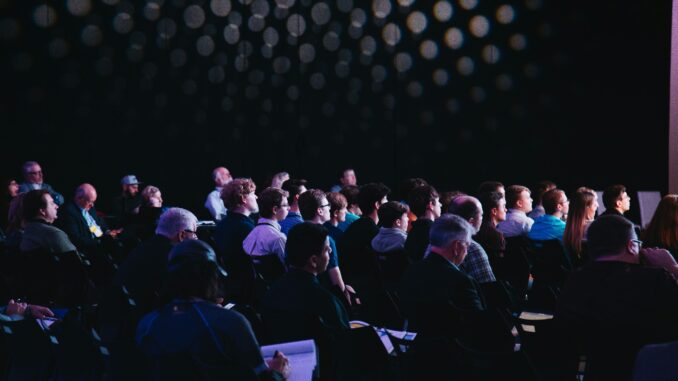
Earlier this summer, I attended the IRM UK Enterprise Architecture, Business Change, and Service Design Conference. For the first time, these disciplines were side by side, three tracks, one conversation. And it struck me: this isn’t just a conference design decision. It’s a provocation and this convergence felt both overdue and full of potential.
As a programme director turned chief enterprise architect turned head of service design, I’ve lived the silos. I’ve also seen what happens when those silos are dismantled.
There was an undercurrent at the conference that transformation doesn’t succeed when these disciplines operate in silos. It succeeds when the disciplines collaborate with shared intent, shared tools, and a shared view of value. And if you attended the conference it definately helped to amplify the shared intent, shared tools and shared view of value.
The service design track felt like the new entrant to the established Enterprise Architecture and Change Management track. And I believe if transformation programmes embed service design alongside enterprise architecture and change management not as a handover but a handshake better outcomes will be achieved.
Case in Point: UK Research and Innovation’s Service Design Award
This year’s winner of the IRM Uk Service Design in award, UK Research and Innovation, showed what’s possible when these disciplines align. Their digital transformation project was led by service design principles, but deeply integrated with enterprise architecture and change delivery from day one.
They didn’t just reimagine the service experience. They strategically aligned the redesign with business architecture, deploying AI tools to automate manual processes, freeing up capacity and improving responsiveness.
This wasn’t surface-level innovation. It was structural. It showed how design can guide enterprise-level change, how architecture can enable it, and how change management can embed it.
It was proof that these disciplines don’t just coexist, they amplify each other.
What It Takes to Work Better Together
From my perspective, embedding design into transformation efforts, especially at scale, requires a few intentional shifts:
- Shared Language of Value
Architecture speaks in capabilities and operating models. Change speaks in readiness and impact. Design speaks in experience and evidence. The goal has to be to align these by mapping pain points to value drivers, and user needs to organisational outcomes. - Joint Ownership of Discovery
Too often, discovery is something design does before architecture or change arrive. We need to make it the starting point for all three disciplines. When architects, change leads, and designers explore needs, constraints, and opportunities together, they define the right problems and avoid solving the wrong ones. - Golden Threads, Not Just Blueprints
Design, introduces the idea of the “Golden Thread”: a way of mapping not just process and system, but people, needs, data, and outcomes across journeys. This complements architecture’s enterprise view and change’s adoption lens. It makes the invisible visible. - Co-located Thinking, Not Handover Culture
We need fewer downstream transitions and more upstream collaboration. Designers shouldn’t hand over wireframes; they should co-create service flows with architects. Change leads shouldn’t retrofit communications; they should shape the vision early.
So Will We Work Better Together in Future?
That’s the question I left IRM UK asking.
It’s clear the appetite is there. UKRI’s case gives us the proof. What we need now is the will, to build cross-disciplinary muscle memory, not just moments of alignment.
Because when architecture holds the structure, change guides the shift, and design brings the experience into focus, transformation becomes more than a plan. It becomes something people feel.
And that’s when it starts to stick.